The Fairness of American Presidential Elections
- You are here :
- home
- politics
- The Fairness of American Presidential Elections
-
©2000-2017 Roedy Green of Canadian Mind Products
We have a president who was selected rather than elected. He stole the presidency
through family ties, arrogance and intimidation, employing Republican operatives to
exercise the tactics of voter fraud by disenfranchising thousands of blacks, elderly
Jews and other minorities.
~ Barbra Streisand (1942-04-24 age:76)
at BarbraStreisand.com.
Act Now
There was a great fuss after the last two presidential
election when all manner of suspected voting fraud was uncovered. There was not much
could be done after the fact. The time to act is before an election, to make sure there
is a clean election. Before an election, people on both sides are in favour of a clean
election. After an election, the side the fraud helped works to block justice. The time
is now to demand a paper ballot, or a voting machine with a paper audit trail with open
inspected software and no modem connections for last minute fiddles.
In Germany, exit polls are accurate to within a tenth of a percent. Germany uses a
very clean paper ballot system with meticulous checking. Voting fraud is so common in the
USA that Americans don’t bat at eye when official results differ from exit polls by
10%. They have come to accept this as normal.
The Owners
In 2004 more than 80% of the vote was counted by three private corporations Diebold, ES&S
and Sequoia. They refused to open their software for inspection or to submit to audit
procedures. Had they wanted, they could have stolen the election and there would be no
way to check up on them.
Diebold is owned by a Christian Reconstructionist family wants to overthrow the US
constitution and replace it with a Christian theocracy. What a peculiar group to trust
with the core process of democracy, one dedicated to destroying it!
Chuck Hagel was chairman of the board of AIS, the owner of ES&S, the voting
machine that computerised Nebraska’s vote. Hagel was the first Republican in
24 years to win a seat. He won all demographic groups including
blacks.
Republicans Tom Delay and Dennis Hastert (both skewered by other scandals)
successfully fought against auditing of voting machines. It is bit peculiar to put a
candidate in charge of counting the vote. He is about the least impartial person you
could find.
Sequoia is partly owned by Saudi and Venezuelan investors. Saudi Arabia is the country
that provided the 2001-09-11 hijackers. Venezuela spawned Hugo
Chavez, a major thorn in the American hide. Again, odd people to entrust with picking
your country’s next leaders.
Voting In the USA
source: Alicia aka
Angry Girl. Did you know…
- Ohio elections officials convicted
of tampering with 2004 presidential recount.
- Robert F Kennedy’s essay in Rolling Stone about the evidence the Republicans
stole the 2004 election with all manner of election
fraud.
- 80% of all votes in America are counted by only two companies: Diebold and
ES&S. source
- There is no federal agency with regulatory authority or oversight of the U.S.
voting machine industry.
- The vice-president of Diebold and the president of ES&S are brothers.
source
- The chairman and CEO (Chief Executive Officer) of Diebold is a major Bush campaign organizer and
donor who wrote in 2003 that he was committed to helping Ohio deliver its electoral votes to the president next
year. source
- Republican Senator Chuck Hagel used to be chairman of ES&S. He became Senator
based on votes counted by ES&S machines. source
- Republican Senator Chuck Hagel, long-connected with the Bush family, was recently
caught lying about his ownership of ES&S by the Senate Ethics Committee.
- Senator Chuck Hagel was on a short list of George W. Bush’s vice-presidential
candidates. source
- ES&S is the largest voting machine manufacturer in the U.S. and counts almost
60% of all U.S. votes. source
- Diebold’s new touch screen voting machines have no paper trail of any votes.
In other words, there is no way to verify that the data coming out of the machine is
the same as what was legitimately put in by voters. source
- Diebold also makes ATM (Automated Teller Machine) s, checkout scanners and ticket machines, all of which
log each transaction and can generate a paper trail. source
- Diebold is based in Ohio. source
- Diebold employed 5 convicted felons as senior managers and developers to help write
the central compiler computer code that counted 50% of the
votes in 30 states.
- Jeff Dean, Diebold’s Senior Vice-President and senior programmer on
Diebold’s central compiler code, was convicted of 23 counts of felony theft in
the first degree.
- Diebold Senior Vice-President Jeff Dean was convicted of planting back doors in his
software and using a high degree of sophistication to evade
detection over a period of 2 years.
- California banned the use of Diebold machines because the security was so bad.
Despite Diebold’s claims that the audit logs could not be hacked, a chimpanzee
named Baxter was able to do it! source
- 30% of all U.S. votes are carried out on unverifiable touch screen voting machines
with no paper trail. source
- All — not some — but all the voting machine errors detected and
reported in Florida went in favor of Bush or Republican candidates.
source
- The governor of the state of Florida, Jeb Bush, is the President’s brother.
source
- Serious voting anomalies in Florida — again always favoring Bush — have
been mathematically demonstrated and experts are recommending further investigation.
source source
Evidence Bush Stole the 2004 Election
Eternal vigilance is the price of liberty.
~ Wendell Phillips (1811 1884 age:73)
abolitionist, orator and columnist for The Liberator, in a speech before the
Massachusetts Antislavery Society in 1852
Bush stole the 2004 election, presidential, senate and house
by using crooked voting machines. Here is the evidence:
- Officially, George W. Bush won November’s election by 2.5%, yet exit polls showed Kerry winning by 3%. The odds of this
happening are about one in a million. In other words, the Bush camp cheated.
- Video Summary
of Ohio: a sampling of some of the impropriety in Ohio.
- Diebold settled a $1.6 million lawsuit with the state of California admitting their machines
were fraud-friendly.
- According to the Dayton Daily News, two Montgomery County Ohio precincts had
extraordinarily high numbers of ballots cast Nov. 2 with no presidential vote counted,
and the county’s overall rates of such undercounts were highest where Democratic
hopeful John Kerry did best.
- CNN (Cable News Network) fudged the exit
polls to cover up for Republican vote fraud.
- The University of California’s Berkeley Quantitative Methods Research
Team released a statistical study — the only method available to monitor the
accuracy of e-voting — reporting irregularities associated with electronic voting
machines may have awarded 130,000-260,000 or more excess votes to President George W.
Bush in Florida in the 2004 presidential election.
- Verified Voting Foundation
and Verified Voting are a group
of Stanford professors, headed by Dr. David Dill, have collected 31,000 reports of election fraud and other problems.
- Unlike democratic countries, where citizens count the ballots under scrutiny of
members of all political parties, in the United States employees of a highly-secretive
Republican-leaning company, ES&S, managed every aspect of the 2004 election.
- Exit polls are normally bang on. They showed Kerry with a landslide, but the voting
machines showed Bush won. Exit Polls are almost never wrong. They eliminate the two
major potential fallacies in survey research by correctly separating actual voters from
those who pretend they will cast ballots but never do and by substituting actual
observation for guesswork in judging the relative turnout of different parts of the
state. According to ABC-TVs exit polls, Kerry was slated to carry Florida, Ohio, New
Mexico, Colorado, Nevada and Iowa, all of which Bush carried. The only swing state the
network had going to Bush was West Virginia, which the president won by 10 points. ABC
has been biased toward Bush all through the election. Why would they suddenly betray
him at the last minute?
- The voting machines were designed to be fraud friendly. There was
no paper trial, no open source software, no sealing of software, no audits. The
software could be changed at any time. The machines were appallingly fraud-friendly.
Republican jurisdictions purchased these openly-crooked machines in preference to
properly designed ones. It was like a casino buying a roulette wheel with a brake
visibly mounted. It is like a gambler buying crooked dice. It is prima facie evidence
he intends to cheat. If catch him with crooked dice, it is up to him to prove he was
playing fairly, not the reverse. At the very least, it was criminal negligence to buy
machines so easy to tamper.
- 80% of voting machines are manufactured by two brothers. They are Christian
Reconstructionists, a cult whose avowed aim is the destruction of democracy and
replacing it with a strictly literal biblical theocracy — e.g. stoning adulterers
to death.
- The voting machines have been compromised dozens of times in demonstrations. One
group even trained a chimpanzee to do it. A real election in Georgia was stolen and
the fraud was detected, even before the federal election. The video showing how easy it
was to fudge the election the central accumulating computer, running Windows, the most
insecure operating system on the planet is no longer available.
- The CEO
of Diebold voting machines said that he would do anything
to ensure a Bush victory — which clearly included fudging the results.
- According to the Charlotte Observer a Diebold employee was
caught tampering with voting machines.
- In 2000, pre election polls underestimated Gore’s
strength by five points. In 2004 they overestimated
Kerry’s strength by five points if you trust the voting machine results. This
underestimate is inconsistent both history and logic. The voters not covered by polls
are overwhelmingly Kerry voters.
- We still have not seen a breakdown by paper ballot vs voting machine. If such
figures are ever released you will undoubtedly see a huge discrepancy with the voting
machines preposterously high relative to the ballots. You need to compare the
distribution of paper ballot vs machines with historical differences for the two
regions.
- Bush prevailed only where there were such voting machines.
- Republicans refused to post intermediate tallies during the day of voting machines.
This allowed them to wait to the last minute to decide the appropriate fudge factor to
win without being too obvious. They could even decide at the last minute not to cheat
at all.
- One third of the vote was counted by such machines. That third is meaningless since
it was made up by the Bush team and is large enough to totally swamp the rest of the
vote.
- The vote accumulating computers use the Windows OS (Operating System)
which is notoriously easy to hack. Its security system
is made of Swiss cheese, an after thought Microsoft tacked on with bailing wire to a
standalone single-user system. Further, only one set of accumulating computers is used.
Whoever has access to those computers can easily substitute a phony set of results.
There needs to be open access to the voting machines so any authorised organisation can
do its own tallies, as a cross-check. The military never use Windows for this reason.
They use Unix or Mac which is much more secure.
- FOX news did a piece on how the voting machines are infallible, comparing them to
ATM
machines. They knew this was a complete lie. They covered for Bush.
ATM machine have
a paper trail and a statement to check up on them. The bank has a vested interest in
making them accurate. The Republican owners of the voting machines had a vested
interest in fraud.
- When reporters asked Bush about Kerry’s landslide in the exit polls in
Florida he gave a wicked little smile and said he was not concerned.
- Professor Stephen F. Freeman of the University of Pennsylvania computes that the
odds of the exit poll statistical anomalies occurring by chance are 250,000,000 to one.
That’s 250 million to one. In other words, Bush cheated.
- NBC news
report of voting fraud. It points out that in Diebold-counted counties that were
heavily Democratic in registration, Bush won overwhelmingly. Yet in counties not
counted by Diebold, there was no such switchover.
- If anyone such as the FBI (Federal Bureau of Investigation) wiretapped any of the voting machines, likely they will
be able to prove tampering, unless the only tampering was done in advance or if there
are witnesses who recorded the precise timing of their votes.
- According to the Washington Dispatch, election oddities occurred throughout Florida
with some counties registering a 400% increase in expected
voter turnout among Republicans while Democrats supposedly experienced a -60% decline
in expected support in certain counties.
- According to the Washington Dispatch, Palm Beach County logged 88,000 more votes than voters. According to the official election results
posted on the Palm Beach County election website, 542,835
ballots were cast for a presidential candidate while only 454,427 voters turned out for the election (including absentee).
- In Baker
County Florida, with 12,887 registered voters, 69.3% of
them Democrats and 24.3% of them Republicans, the vote was only 2,180 for Kerry and 7,738 for Bush, the
opposite of what is seen everywhere else in the country where registered Democrats
largely voted for Kerry. In Dixie County Florida, with 4,988 registered voters, 77.5%
of them Democrats and a mere 15% registered as Republicans,
only 1,959 people voted for Kerry, but 4,433 voted for Bush.
- In a precinct Gahanna, Franklin county Ohio, 4258 votes for Bush 260 for Kerry.
Records show only 638 voters cast ballots in that precinct.
- Dr. Rebecca Mercuri explains voting machine fraud

- Princeton professor Edward Felten hacked a Diebold
voting machine.
- Cheney supporters are denouncing anyone who questions the election as kooks,
conspiracy theorists and black helicopter crowd. Yet they know ballot stuffing is as
American as apple pie. They desperately do not want an investigation. They know they
cheated.
- Blackboxvoting.org said Bush
cheated. They had the biggest freedom of information request in history in progress
to prove it conclusively.
- Diebold
Fraud: Details of how the design of the Diebold voting machines is done to make
fraud deliberately easy. part II.
Fund the Recount
Never, never, never give up.
~ Winston Churchill (1874-11-30 1965-01-24 age:90)
Blackboxvoting.org and
Ralph Nader teamed up to set up a 527 special fund to raise the $200,000 US needed to pay for a recount in Ohio. That could be enough
to kick Bush out of the White House.
There is no safety for honest men except by believing all possible evil of evil men.
~ Edmund Burke (1729-01-12 1797-07-09 age:68)
Immigrating To Canada
Muslims and gays particularly might want to
consider leaving the USA while they still can. With the rise of fascism in America, many
people are looking to get out. Canada is the logical choice since there is no language
barrier and the culture is familiar. Toronto has a hellish climate, hot and humid in
summer and bitter cold in winter, however, this may be quite tolerable to someone used
to life on the east coast of North America. Alberta is a boom and bust economy, now going
through a boom, so it is easy to get a job in any trade. BC has the mildest climate. Its
economy is recovering but is not rolling. It is fairly easy for Americans to emigrate to
Canada. Read the Self-Counsel
Press books for details.
Book referral for Immigrating to Canada: Who Is Allowed? What Is Required? How to Do It
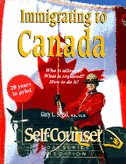 |
recommend book⇒Immigrating to Canada: Who Is Allowed? What Is Required? How to Do It |
| by |
Gary L. Segal |
978-1-55180-180-3 |
paperback |
|---|
| publisher |
Self-Counsel |
978-0-88908-675-3 |
hardcover |
|---|
| published |
2010-01-01 |
|---|
|
| Greyed out stores probably do not have the item in stock. Try looking for it with a bookfinder. |
Book referral for Living and Working in Canada: A Survival Handbook
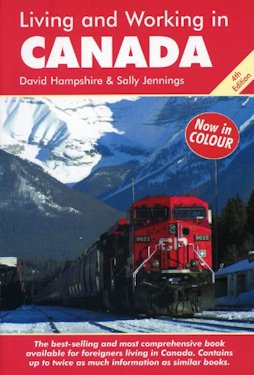 |
recommend book⇒Living and Working in Canada: A Survival Handbook |
| by |
David Hampshire, Sally Jennings |
978-1-905303-64-9 |
paperback |
|---|
| publisher |
Survival |
B005NIY5M8 |
kindle |
|---|
| published |
2009-10-15 |
|---|
| Original by Graeme Chesters. |
|
| Greyed out stores probably do not have the item in stock. Try looking for it with a bookfinder. |
Escaping the Draft
Canada is not a safe place any more for draft
resistors. Bush forced Canada to sign a treaty allowing American dragoons to come into
Canada and kidnap anyone suspected of being American and drag them back to the USA
without the intervention of Canadian courts. From there, they can even be tortured
legally. Bush could also use this provision to punish Canadians such as myself who have
opposed him.
You might have some success ducking the dragoons if you pay off your credit cards so
they have no record of your address and do everything you can to keep your name and
address out of any computer databases, e. g. do not drive a car. Don’t get a phone,
or electric service in your name. You might also pick some obscure remote town to live
into make it not worth their while to come get you.
Changing the Law
I wrote the following before the extent of the
outright fraud in the US presidential election had come to light. The Harris fraud in
removing black Democrats from the rolls and the rigged electronic voting machines dwarf
the effects of the butterfly ballots and Scalia’s legal fiddles. To skip to the
chase, look at the links below that get into the
fraud. The bulk of this essay is about the systemic inequity.
Because the 2000 presidential election was so close, it
magnified many inequities in the American election system. This essay discusses those
inequities and suggests remedies.
Constitutional Inequities
When the USA was formed, it was created
by the coalescing of thirteen separate countries. The founding fathers were far more
concerned about he equality and rights of these separate states than they were about the
equality and rights of the individual citizens. That concern survives to this day. Senate
power is allocated equally to the various states. This means a citizen is a small state
such as Rhode Island has more voting power than a citizen in a large state like
California. You could assign senators by state population the way the house works, but
then the senate would keep expanding. Perhaps it would be better to give each senator as
many votes in the senate as there are voters in his state.
The founding fathers were also concerned that every region had a say in the running of
the country. This means that a citizen living in a sparsely populated part of the country
such as Utah has more voting power in the House Of Representatives than a citizen in a
densely populated state like New Jersey.
The founding fathers did not believe in democracy as we know it today. They did not
trust the mob to govern. They wanted a republic where
well-educated elected representatives made all the decisions. The masses should never be
permitted to directly make any decision. There were no national newspapers, no
TV and no Internet. The average citizen did not even know the names of the candidates.
So the founding fathers set up an indirect system called the electoral college to elect
the president. A group of impartial, non-party-affiliated, educated men, who were
familiar with the presidential candidates, made the selection. In the constitution, the
electors are not even required to vote for the candidate they are pledged to. 27 states
have laws to bind them, but these laws may be unconstitutional. The penalty is typically
a $100 fine and being kicked out of the party. The
constitution even made provision for a state legislature to select these electors in any
way it saw fit. Legally the state legislature need not even hold an election to choose
the college of electors. This harks back to the days when the states were nervously
considering the possibility of union and wanted to retain every possible power to
themselves. The state legislatures originally directly chose the electors for president,
without holding an election.
Further, in most states there is a winner-take-all-the-electors rule, which leads
occasionally to the strange anomaly that the president chosen is the one with the
fewest popular votes.
Modern Americans may consider these founding fathers’ notions in violation of
the democratic principles of all men are born equal and
one man; one vote. However, as President Jimmy Carter pointed
out, these rules are almost impossible to change because they are burned into the
constitution. They require 38 states to agree before they can be changed. Small states
and sparsely populated regions are not about to give up their privileged positions, even
if they recognise that privilege is unfair.
President Jimmy Carter said the most we can hope for is an abandonment of the
winner-take-all-rule because that change does not require a constitutional amendment,
and because it can be done a state at a time. If states apportioned presidential electors
in proportion to votes, most of the probability the anomaly of the winner in the
electoral college getting the fewest popular votes would disappear.
Abolish The Electoral College?
The arguments for abolishing
the electoral college include:
- A direct vote for president would make all votes of all Americans equal. It is the
only scheme that would truly implement the democratic principle of one man one
vote.
- A direct vote avoids the politically embarrassing situation of the loser of the
popular vote winning the electoral college.
- It avoids the problem of the faithless elector, an electoral college member who
breaks ranks and votes for a candidate other than the one they were pledged to vote
for.
- Constitutional changes are not impossible. The constitution has changed to keep up
with changing times. At the time of the founding fathers, there were no political
parties. Washington and others considered them evil. State legislators nominated the
presidential electors and the senators directly, without holding any election. Senators
were not elected by popular vote until 1913.
- It is simpler and cleaner.
- States are simply groupings of people. Why should people in a smaller grouping be
more important, have more say than people who belong to a larger grouping? What counts
are people, not groupings. The whole idea of equality of groupings is a bit of
legerdemain to disguise the fact Group A has successfully fooled Group B into giving
Group A’s citizens more importance than the citizens of Group B. The notion of
equality of states is bogus; people are equal, not states!
The arguments for keeping the electoral college include:
- It is too difficult to change. It would require 38 states to ratify the
constitutional change. It would also likely require concomitant changes to the
constitution to give the federal government powers over how elections are handled so
that the same rules would apply in every state. It is politically impossible.
- You would need overwhelming popular will to make the change. Right now support for
it is evenly divided on partisan lines because of the accident that the electoral
college system favoured Bush in the last election. It could just as easily go the other
way in the next election.
- It makes the votes of citizens of small states somewhat more important than votes
of citizens of large states. They need this edge because the economics campaigning and
TV advertising favour spending only in large states.
- It would bring into question the election rules of the senate, which treats all
states, even ones 500 times larger than another absolutely
equally with two senators per state. A senatorial vote in a small state is 500 times more powerful than in a large state. The electoral college is
nowhere near this unequal.
- It is not that broken. It is a fine tradition. It has only caused serious problems
four times in history.
- It simplifies vote counting. Each state is counted independently. If you had a very
close federal election, you would have to recount everywhere. On the other hand, the
odds of a federal election differing by only a 1000 votes are
much, much less likely than a state election differing by only 1000 votes, so nearly always the result would be clear on election night
with a direct vote.
- You can address 90% of the inequity without abolishing
the college. Just get rid of the all or nothing rule, which would not require a
constitutional change.
Fraud Inequities
The American election is designed to make fraud easy,
especially in absentee voting. Voters are sometimes, but not always, required to show id.
If you are a black voter, much more likely ID will be demanded. If you are black, much
more likely such ID will be declared invalid. Absentee voters are not even required to
provide the number on the voter ID card if they plan to vote Republican or Democratic,
because those two parties are given the list of voter id numbers to
apply to absentee ballot requests that the parties print, mail out and validate
before submitting them. In other words, those people voting Republican or
Democratic by absentee ballot need never show any id at all, ever! They
can vote as many times as they want without even the risk of showing up at the polling
place.
The IDs are issued by a single canvassing officer in each county, without any uniform
accounting scheme, or cross checking of canvassing officer’s integrity. It is a
simple matter to discover which voter IDs belong to voters who rarely vote and submit
phony absentee ballot requests for them, using the computer tapes provided to the
Republican and Democratic parties. It is like giving the mint’s printing plates to
the Republican and Democrat Parties and telling them We trust you
not to use them to print any money.
The solution is a proper voter id card, ideally a smart card with embedded digitally
signed photo of the voter. This makes it forge proof. You must always
use this card to get an absentee ballot or to vote, no exceptions. The voter id card
should contain a digital fingerprint so that you can ensure no duplicates are issued. The
fingerprint itself exists only in the card. When you apply for a new card, that
automatically invalidates any previous card you were issued. The voter id card ensures
you vote only once and in only one place.
Ballot Machinery Inequities
Here is what I consider my most persuasive argument that Republicans
have used voting machines to rig elections, not just that the machines are constructed to
make it easy for anyone to do that. In Germany, where elections are closely audited,
using a clean paper ballot system similar to Canada’s, exit polls have been within
a tenth of a percent of the final ballot for two generations. However, in the USA, in the
2002-11 senate election, between incumbent Democrat Max Cleland
and Republican Saxby Chamblis just prior to the election Cleland was ahead by 5 points in
every poll. Yet the election result showed Chamblis ahead by 7 points. You just
don’t get 12 point statistical errors. This was Georgia’s first
all-electronic election.
Chuck Hagel was the first Republican to win the Nebraska senate seat in 24 years. He won in every demographic group, even poor blacks. He won just
after his company AIS/ES&S sold all the unauditable voting machines to Nebraska.
There are a number of different voting schemes used in various parts of the
country:
- Electronic: e.g. touch screen.
- Optical scan
- Paper ballot
- Punch card
The electronic systems are pretty well fool proof. They won’t let you
accidentally vote for two candidates for the same office, for example. It is still
possible to accidentally forget to vote for a presidential candidate. You could
accidentally hit the wrong button, but even then you can recover. Perhaps you could be
totally flustered by the new technology and be frightened off voting altogether, or leave
the booth without completing your ballot. Humans are not involved in counting, so barring
computer fraud, you get a 100% accurate count. On the other
hand, they can easily be programmed to give any result the voting machine company
desires.
The optical systems are almost as foolproof as the electronic ones. You fill in your
ballot with a pencil. Then you poke it into a slot. If there is anything wrong with it,
it spits back out at you and gives you a chance to correct the problem. There is still a
chance you won’t understand what the problem is, or how to make the correction and
give up. If you don’t make the marks dark enough the machine will erroneously think
you decided not to vote, but it won’t warn you.
The paper ballot is fairly straightforward. The problems come in design. Butterfly ballots, multipage page ballots or
folded ballots can confuse voters. These have to be counted by hand, so the counts are
never exact. Humans look at the marks and have to use subjective judgement to decide if
they are dark enough, big enough, of the correct shape etc. etc. The conscious or
unconscious partisan bias of the counter can affect how ballots are tallied.
The punch card is the worst of the balloting schemes. One in five punch card votes
were discarded in Broward county in Florida. They permit both overvoting and undervoting
without warning. They have the problems of hanging, pregnant and dimpled chad. Tallying machines can’t register
anything but a completely clean hole. Holes may not be clean because of inexperienced
voters, blunt styluses, old equipment, full chad hoppers, improper insertion of the
voting card in the machine, etc. In addition, the prepunched chad can sometimes fall out
with rough handling, turning a valid vote into an invalid overvote. This scheme
disenfranchises a sizeable chunk of the voters who are forced to use it. Hand counting
only partly corrects the problem. Hand counts are rarely done, or even when ordered can
be stalled both legally and by partisan counters, so they are never completed. To give
an idea of the magnitude of the problem, on average, country wide, 2% of voters fail to select a presidential candidate, mostly because they
have no preference or because they consider no candidate acceptable. With punch card
balloting, this ranges from 5 to 20%. The difference is presumably caused by the problems
with using the punch card balloting equipment.
To make matters worse, this obsolete equipment does not toss ballots equitably. It is
used mainly in the poorer districts. This means use of this equipment is biased against
the poor. Since the poor tend to vote Democratic, the use of this equipment is biased
against the Democratic party. In the rich districts, using modern voting equipment,
0% of the deliberate vote is thrown away. In the districts
using the punch card voting scheme, 3 to 18% of it is,
routinely, without comment or objection.
Some claim the problem lies with the voter. Unintelligent voters who cannot negotiate
a successful punch card vote don’t deserve to vote. This is improper on two counts.
First, the franchise is not based on intelligence. The interests of every man count
equally whether he is a genius or an illiterate idiot. Secondly, this hurdle of punch
card balloting is placed only before the poor. To be fair, it should apply equally before
the wealthy.
The use of obsolete punch card equipment should not be blamed on any political party.
The problem is that new voting machinery is a low priority in a cash-starved county and
it gets put off. In other countries, voting law and voting equipment is a federal
responsibility to ensure uniformity. In the USA, it is, according to the constitution, a
state and county responsibility.
Literacy and Language Bias
In an upper class household, every child
learns to read English and how to vote. They know you can’t vote for more than one
candidate. They know you must use an X. In some parts of the USA 20%+ of people cannot
read. Yet their interests are still important. Similarly many new citizens have shaky
English. They won’t easily understand the written instructions they are given. They
may come from countries without voting, or with quite different voting rules. Nobody
teaches them to vote.
How do you fix this? First you must teach children to vote in schools. They must have
mock votes that are as close to the real thing as possible. They need to understand
overvotes, undervotes and that there are rules for what constitutes a valid ballot.
Second you must provide instruction to adult voters prior to voting day in a variety of
languages. People should be able to view a video and practice vote. Third, modern voting
machines should prompt with a wide choice of languages, both visually and with the spoken
word to guide. Photos of the candidates should appear on the ballots, along with party
logos. You should not need to be able to read English or even be able to read to vote
accurately.
People who do something as mindless as sort mail are given a day’s training. Why
do we expect every citizen to be able to use voting equipment correctly the first time,
without instructional materials, without training, without practice, without supervision?
We would never dream of demanding such performance of casual labourers in the
workplace.
Safe Harbour
Safe harbour is a cut off date. If the vote
counting from a state is complete by then, it is guaranteed to count federally. It cannot
be challenged. Results as late as January 6 still count, but in theory, they could be
challenged. This sounds like a great idea. You can’t have the contest going on
right up inauguration day. The catch is in any contest, the status quo will favour one
side. That side can simply stall and run out the clock until the safe harbour date. They
can win without really needing to actually win the most votes. All they have to do is
keep the election tied up in legal red tape. This was the basic strategy by which Bush
won the election. In a future election, the status quo could just as easily favour the
Democrats and they would be the ones running out the clock.
How do you make the contest more fair? You have to make recounts automatic. You have
to specify the clear conditions under which they are held or not held. You can’t
have politicians making arbitrary partisan decisions on whether recounts or hand counts
are justified. Once started they have to be completed. Since there is no
motive to stall them, they will thus complete with dispatch. Canada managed to count, by
hand, 17 million votes in four hours. Surely the USA could do as well when one side has
no motive to stall the process.
Canada uses a simple paper ballot, uniform across the country. Note the black
background discourages people from putting their X in the wrong place and the way the
names and Xs align.

You have to make clear objective rules for manual ballot counting. Wherever possible
you should use fool-proof machine voting that cannot create an invalid
ballot or produce an incorrect count. You ban punch card balloting. This allows counts to
be completed quickly without compromising the safe harbour date.
The Coup Provision
There is an obscure
provision in the constitution that was originally intended to handle the case of a tie or
some hopelessly mired election when it was impossible to determine a clear winner. In
that case the state legislature could break the tie and decide the winner. However, some
have claimed this provision could be used much more broadly. If any
legal contest, no matter how minor were not very quickly resolved after the election,
then the state legislature would have the right to select the electors, totally
independently of the election results. They have the legal right to
completely reverse the election.
This has not been done for over a hundred years, but the option is still there and
Jeb Bush threatened to use this provision had Al Gore prevailed in the courts and the
counts. After it became clear the Federal Supreme Court would rule for Bush, the speaker
for the Florida legislature withdrew the threat and tried to pretend they had never made
it, or ever intended to carry it through. Whether or not Feeney was truthful, this
loophole should be closed. Unfortunately, that would require a constitutional amendment,
and such a change would require states giving up the power to steal the presidential
election if they ever wanted to. They are not about to give up any power, no matter how
corrupt, or how unlikely they think they would be to use it. I was rather astonished to
find out that opinions on the validity of this coup fell
perfectly down party lines. All Democrats disapproved. All Republicans approved. I
strongly suspect, had the Florida legislature been Democratic, we would have seen the
reverse pattern. The next time this coup option happens it could equally likely tempt
Democrats. Using the coup provision may be constitutionally
permissible, but so is shooting your dog or pooing on your lawn, but that does not
necessarily make it a great idea.
Third Party Candidates
The presence of third parties complicates
the election. Sometimes when a right wing candidate runs such as Jesse Ventura, Ross
Perot, Pat Buchanan or George Wallace, it splits the right wing vote and incidentally
helps the Democratic party. Sometimes when a left wing candidate runs, such as Dr. Spock
or Ralph Nader, it splits the left wing vote and incidentally helps the Republicans. This
can lead to the anomaly of a candidate being elected that the majority of the population
detest.
There are three main proposals to deal with this problem:
Run off elections
If the election is close, you have a run off election
between the top two contenders. The main problem with this is it takes extra voter
time and money.Approval voting
You can vote for as many candidates as you like. You vote for
all the candidates you approve of. The candidate with the most votes wins. This lets
you vote for both for Pat Buchanan and George Bush, without diluting your vote for
Bush should Buchanan be out of contending. Your voting power is the same whether you
use one, two or three votes. You can use it to vote for all but the candidate you
detest. Or you can use it to vote for just the best candidate. You can vote for all
candidates to let it be known you approve of all of them equally. You can vote for no
candidate to let it be know you think they are all turkeys. One advantage of this
scheme is overvotes and undervotes are just as meaningful
as a vote for a single candidate. Even if a voter does not understand the rules, his
vote still counts.Rank voting
You rank the candidates in order. The counting process gives more
points for a first rank than a second rank. The candidate with the most points wins.
Rank voting: You rank the candidates in order. The counting process gives more points
for a first rank than a second rank. The candidate with the most points wins. It is
more complicated to vote and count. It pretty well requires automated equipment to
count quickly. Vote theorists claim this scheme, officially called Borda voting,
makes the most people happiest with the result.
Australia uses a type of rank voting that works like this: You rank the candidates
in order. The candidate with fewest votes is knocked out and any votes against that
candidate are redistributed to those votes’ next most preferred candidate,
until there is a clear winner ( >50% of the total vote). Australia became a nation
in 1900, after the American civil war. A great concern was
to constitute the commonwealth so as not to repeat some of the problems experienced
by the US republic. Presumably, the new South African constitution is better
still.
If you are curious to further explore the problem of voting schemes to deal with
more than two candidates, see Discover Magazine November 2000
page 75 May the Best Man Lose where they discuss the mathematics and
paradoxes of various voting schemes. Two terms you need to understand when studying
voting are plurality and majority. A candidate wins the
plurality of votes when he gets more than any other candidate. A candidate wins
the majority of the votes when he gets more than 50%
of the votes. When there are only two candidates, they amount to the same thing.
What Do You Need to Recount?
If you add up a column of numbers and
you want to be sure you are right, you add them up again. If you get the same answer you
quit. You repeat until you get the same answer at least twice, though not necessarily
twice in a row. Even better, you talk somebody else into doing the checking addition for
you.
In doing recounts, the same principle should apply, except that you don’t insist
on perfectly matching totals, just close enough so the error would not make any
difference. If the difference between candidates is large, you can stop before doing even
one recount.
The punch card vote (or any vote for that matter) is made of three parts, the
valid vote, the undervote and the overvote. It turns out you
have to look at all three to get a perfectly accurate total. Electronic voting machines
ensure it is impossible to create any overvotes, though they do permit undervote blank
ballots.
Valid Vote
A machine counts the valid vote. What the machine
can’t deal with, it spits out as the undervote (machine saw zero votes) and
overvote (machine saw two or more votes). The buck stops there normally.
If you run the ballots through the machine twice and you get the same total, nobody
disputes that number, so long as different operators did the work, under scrutiny. In
any recount, there is never a need to literally count any ballots with your
hands, even invalid ones. Contrary to common Republican belief, you only need separate
them into piles and let the machine count them.
Undervote
If it turns out that the undervote
might matter, the undervote then has to be examined manually and categorised into piles:
- blank ballot.
- valid ballot (by whatever rules are in play for dealing with dimples and hanging
chad).
- invalid ballot.
- disputed ballot. Judges did not unanimously agree on how to handle it. Somebody
else will have to decide what to do with it.
Of course, only the valid ballots count. Blank ballots are considered invalid,
contrary to a rumour put out by some wily Republicans. Arguing over which pile a ballot
belongs in: valid or invalid need be done only once, though the counting should be done
twice, with possible extra review of the disputed ballots.
Overvote
You then may have to examine the
overvote, which sometimes might matter. How could this be? The voter has
marked his ballot for more than one person, clearly an invalid ballot? n’est-ce que
pas? However, ballots have a write-in slot at the bottom. If the person votes for his
candidate and also writes him in, that may or may not be considered a
valid ballot. Rules could conceivably work either way. Machines can separate out the
potential write-in duplicates and allow for hand adjudication. A machine can then count
the pile of ballots that were manually decided to be valid. By Florida’s
clear intent of the voter rule, the overvote did
matter in that election, though it was never counted officially. Let us hope the
unofficial Miami Herald counts take
the overvote into consideration.
News media report election results and exit polls even
before the polls close in the western half of the country. This may discourage westerners
from voting, or may unduly influence the way people vote. Both supporters of the front
runner and runner up may be discouraged. In the last election we even saw this effect
within the two time zones of Florida. Happily, experiments have shown voter rarely change
their votes based on such reports. However, they are often discouraged from voting.
Canada tries to solve this problem by making reporting before all the polls close
illegal. But with the Internet and long distance telephone calls, it is impossible to
keep poll results secret. I suspect the only fair way to handle this is to have a uniform
poll closing time across the country. This, of course, would delay the counting and force
people to stay up into the wee hours to learn the winner. Equivalent would be to close
the polls early in the east, but delay vote counting or delay announcing any results
until the polls close in the west.
There is nothing much you can do about exit polls, but these are not that much
different from polls reported on the day before the election.
Another problem with the media is the trivialising of the election and politics. For
example, after one of the televised debates between Gore and Bush, an MSNBC reporter
asked the audience, "Who do you think came across as nicer?
He did not ask, Who would you vote for? or Who do you think would make the best leader?,
or Who best demonstrated his competence to lead the country?" The question he
asked was almost as irrelevant as asking who had the nicer hair. Perhaps you can forgive
the twit for asking about the only question he could that would put Bush, his
boss’s (Bill Gates') favourite, in a good light.
Platforms and issues are forgotten. Trivia, personality, mannerisms and sound bites
take over. You could go through an entire day of CNN
coverage without
learning a single fact about what sort of legislation either candidate favours. In
reporting Clinton, the media were ten thousand times more interested in his penis than
his pen. Not that the travels of the presidential penis were uninteresting, but they
totally eclipsed what the president was doing, both good and bad, that actually
affected the welfare of the country.
Supreme Court Decisions
Because the laws were fuzzy, both the
Florida and Federal Supreme courts became involved. In the USA, supreme court judges are
political appointees and tend to be party hard liners. Justices Souter and Stevens were
notable exceptions.
In a fight like this everyone is hopelessly partisan. Almost no one
can think clearly about what is fair or proper. Partisan bias clouds all judgement, even
that of supreme court judges. I am a Canadian, theoretically disinterested, but with a
pro Gore bias. I was impressed by the fairness of the lower level courts and shocked at
the naked partisanship of the higher courts, particularly the Federal Supreme court. Most
outrageous was Justice Scalia’s addendum to the stay to stop the counts which said
in effect, "It does not matter if this stay is fair to Gore, I have already decided
Bush is going to win before I have heard the evidence."
Attorney Mark Levine has explained the embarrassing lack of logic in the Supreme Court
Decision in this layman’s guide to
it. Harvard professor Larry Tribe put it charitably, This decision
will be hard to teach..
What can you do about this? There is no appealing the Supreme Court’s actions.
You legally have to accept what they did, no matter how partisan. You could insist that
new supreme court justices be confirmed with a two thirds majority vote. That
would encourage centrist judges who would not be wildly partisan. You could permit recall
of a supreme court judge with 60% vote, so that disgracefully
partisan judges could be more easily removed. You also want to pre-decide these issues
clearly in law so you don’t need the Supreme Court to make up law on the fly during
elections.
Lack of Recusing
It is customary for a judge who has a conflict of
interest to recuse himself, so as to avoid any possibility he might allow self-interest
to sway him.
What actually happened in this case?
Justice Clarence Thomas (a white conservative judge with black spray painted skin by
Ron Popeil), had a wife, Virginia Lamp Thomas who worked at the Heritage foundation, a
leading conservative think tank in Washington D.C. she had just been hired by George W.
Bush to help recruit people in the impending administration.
Eugene Scalia, the son of Justice Antonin Scalia, was a lawyer with the firm of
Gibson, Dunn & Crutcher — the very law firm representing Bush before the
supreme court.
This conduct would be nothing of note in ordinary politics, but in the lofty realm of
supreme court, this is unprecedented foul play.
A Call To Action
Napoléon
observed that God always
seems to favour the biggest army. Were he alive today he might similarly note that the
electors seem to favour the candidate who spends the most money on TV ads.
The unfairness of lies perpetuated in TV ads vastly overshadow the inequities in the
voting mechanism. The key to fairness is to take the debate out of the hands of the spin
doctors and media moguls and put it back into the hands of the people. Fortunately, the
technology for doing that now exists: the Internet which includes email, the website, the
webring and the newsgroup.
It is important that voters learn where the candidates stand on all manner of issues.
You can research that and let it be known. What you find out may be something only of
interest to a small segment of the population, e.g. their position on whale hunting or
salmon conservation. However, that can be a key issue, or an indicative issue that
actually persuades a voter. There is not much point in rabidly cheerleading your
candidate or booing the opposition. You won’t change anyone’s mind. The more
neutrally you can present the information that you have researched the more credibility
you will have.
Here in Canada we have an institution called the all candidates’ meeting. It is
something like the American Town Meeting, but much more fun. All
candidates are invited to attend. Audience members line up at microphones to lambaste the
politicians and ask them questions. The questions are not prescreened. The politicians
poke holes in each others’ replies. Groups of lesser candidates gang up on the
front runners. They don’t hypocritically play kissy face the way they do in
America, The audience cheers and boos the responses, making a Jerry Springer audience
look tame. It is revealing to see a politician without the protective film created by his
handlers and spin doctors.
My Mom told me that when the newspaper gets a letter to the editor, or a politician
gets a personal letter, they assume there were at least twenty other people with the same
idea, but too lazy to write. You have the strength of twenty men when you get off your
butt and write. With a website, your writing can reach the entire country, nay the entire
planet, inspiring a select audience everywhere.
Hall of Shame
hall of shame
most
shameful |
Democrat |
Republican |
|---|
| act |
- Canvassing board changing the chad counting rules on the fly more than once.
- Attempting to count dimples, even though historically dimples had never
been included as valid ballots.
|
- Florida Legislature threatening to appoint Bush electors even if the courts
determined Gore was the true winner.
- Extreme efforts to block full and accurate vote counts.
- K. Harris’ discretion in stopping the
counts in progress that had been deliberately stalled by Republicans. Though
she had the legal right to do this, that was not the precedent.
- Republican Sandra Goard, canvassing officer, allowing Republican friends
into fix the absentee ballots, knowing it was
contrary to law, then lying about it under oath.
- Justice Scalia saying the stay order to stop the vote count need not be
fair to Gore because he had already decided to give the election to Bush,
before he had heard the arguments. By stopping the count, he guaranteed the
Republicans would successfully run out the clock to the optional safe harbour
deadline of December 12.
|
|---|
| spin |
- Blaming the Republicans for the unfair punch card balloting when it was
primarily purchased by Democratic canvassing boards.
- Blaming the Republicans for racism and bias against blacks when it was
Democratic canvassing boards responsible for the ancient punch card equipment
that tossed their votes.
|
- Blaming Democrats for throwing out military absentee ballots when it was K.
Harris’s office who send out the memo telling canvassing boards to do
that.
- Dissembling word play on the word counted, claiming all votes had
been counted even though the ballots had not been
examined or included in any vote totals.
- Blaming Gore for cherrypicking the recount counties when Bush had equal
opportunity to request recounts where it would be favourable to Bush. Bush
blamed Gore for Bush’s own failure to act.
- Claiming that blocking the recounts was a matter of
principle.
- Repeatedly accusing the Democrats of tampering with the ballots without
evidence.
- Karnak the Magnificent. Claiming that totally blank ballots were being
counted for Gore, that the process was done with ESP (Extra Sensory Perception)
without examining the ballot, claiming the process was done by looking at the
other votes on the card to see if the voter tended to vote Democrat or
Republican and claiming that it was a totally arbitrary process that was
completely subjective. This was all shown to be bullshit when the Republican
judge who was involved in the details of counting described in great detail how
the counts were done and testified that in counting nearly always the
adjudications were unanimous.
- Claiming that by law all ballots rejected by a punch card tabulating
machine are invalid ballots.
|
|---|
| hypocrisy |
- Attempting to block absentee ballots from counting after saying the
principle that every vote should count should be paramount.
|
- Complaining that it was unfair to count only the counties where Gore had
requested recounts, then rejecting the Florida Supreme court ruling to count
all counties.
- Blaming the Democrats for the lack of a clear definition of a valid punch
card ballot, when the fuzzy legislation was written by the Republican state
legislature.
- The Federal Supreme Court put the Florida Supreme Court in a Catch 22
position. If the Florida court formulated clear uniform rules on what
constitutes a valid ballot, that would count as writing new law. If they did
not formulate such rules, that would violate equal protection. Heads I win,
tails you lose.
|
|---|
| blunder |
- Designing the Palm Beach butterfly ballot.
- Media reporting a Gore win for Florida before the polls closed.
|
- K. Harris’s office sent out a memo saying military absentee ballots
without postmarks should not be counted. This was erroneous. By both Federal
and Florida law military ballots don’t need a postmark.
|
|---|
| cunning |
- The affable speech conceding the election. Gore shot to 10 points higher
than Bush in public opinion with it.
|
- Scalia’s second ruling. It was an absolutely masterful piece of legal
legerdemain. It was convoluted, but it successfully managed to pull off many
goals, i.e.
- It made sure the Florida legislature did not appoint electors, rather
than taking the ones from the winner of the count. That thorny
constitutional issue had to be sidestepped at all costs, even if it meant
flagrantly giving the election to Bush.
- It gave the election to Bush, no matter what the Florida Supreme court
did.
- It ensured future elections would have to be fought with fair, uniform
rules. This ruling, that theoretically only applies to Florida, should
eventually enforce nationwide fairness.
- It reaffirmed the powers of the Florida Supreme Court.
- It settled the election instantly.
- It enhanced the reputation of the Supreme Court. By having two
Republican justices dissent, it gave the impression that the court was less
biased than had the vote been strictly partisan, without compromising the
result. The 5-4 split could have been a lucky fluke, or a deliberate
manipulation.
|
|---|
| mannerism |
|
|
|---|
| contributors |
- Teamsters Union, Jane Fonda.
|
- Philip Morris Tobacco, Merck Pharmaceuticals, Bill Gates, air and water
polluters, religious right.
|
|---|
Who Builds the Voting Machines?
It is enough that the people know there was an election. The people who cast the votes
decide nothing. The people who count the votes decide everything.
~ Josef Stalin (1878-12-18 1953-03-05 age:74)
Electronic voting machines are being peddled that are fraud-friendly. Even a first
year computer science student could cook an election with the total lack of audits and
open source. There is no excuse for anything proprietary or secret in a voting machine.
That just invites fraud. Further, the voting machine companies are run by Bush supporters
and by Christian Reconstructionists, a peculiar sect that wants to replace the American
democracy with a Christian theocracy — rather odd people to be in the voting
machine business.
For the first time in history, Florida exit polls differed widely from the official
counted vote in the 2000 Presidential election. Exit polls had
Gore far in the lead. No one then thought the Bush family was crooked enough to steal an
election that directly.
Fraud Friendly Diebold Voting Machines
It is enough that the people know there was an election. The people who cast the votes
decide nothing. The people who count the votes decide everything.
~ Josef Stalin (1878-12-18 1953-03-05 age:74)
Diebold voting machines are scandalously fraud-friendly. Diebold should know better.
They make equipment for the banking industry, so they know perfectly well how to make
fraud difficult. Here are some of the techniques they use to make fraud easy:
- Keeping the software secret claiming it is proprietary, which is nonsense. There is
only one legitimate way to count votes. That makes it easy for Diebold or anyone else
to hide fraud subroutines in the code. No one, not even the election officials are
allowed to examine the computer program inside each voting machine for evidence of
tampering.
- No paper audit trail.
- No sealing mechanism to freeze the software inside each voting machine. It can be
changed remotely at any time.
- Only one set of computers accumulate and tally the vote. They can be easily hacked
and compromised, or fiddled with a hidden back door. Everyone who has ever had a virus
on their computer knows how easy this is to do. It is even easier with physical access.
Anyone who wants to should be allowed to tally the vote with their computers.
- No inspection, audit or freezing of the software used in the Diebold accumulation
computers.
- Diebold has announced they will do everything possible
to ensure a Bush win. At least they are honest about their intent to commit fraud.
- Diebold has already been caught fudging an election in Georgia.
- Fraud software can add just the minimum number of votes to tip the balance. The
very existence of near tie elections is evidence of vote tampering. Statistically they
should be rare.
- A chimpanzee was trained to successfully subvert the Diebold accumulation
computers. It is not that difficult.
Diebold machines must be stopped or the election is a fraud. It is an act of
patriotism to destroy such a democracy-destroying device.
It’s not the voting that’s democracy; it’s the counting.
~ Tom Stoppard (1937-07-03 age:80),
playwright
Parting Thought
There is a great temptation in formulating fairer
rules, to try to weight them to favour your preferred candidate under the conditions of
the last election. This is short sighted. In the next election, your favoured candidate
could almost as likely be hurt by that bias. Unfair rules you enact now will eventually
come back later to bite you.
Americans are strange. Republicans like to tease the Democrats for being reds or
pinkos, yet Republicans refer to states the Republicans control as red. States that vote
Democratic are known as blue.
The party managers know where the public stands on a whole list of issues. Their
funders just don’t support them; the interests they represent don’t support
them. So they project a different kind of image.
~ Noam Chomsky
(1928-12-07 age:89)
Links
Unfortunately, almost all the stories on voting
machine fraud written between 2000 and 2004 have been withdrawn. I don’t know if this represents Orwellian
malice or naïve foolishness on the part of the media believing that voting
machine fraud is no longer relevant. Obama is crazy if he forgets that voting machine
fraud elimination is the top priority to getting elected. Getting rid of fraud-inviting
machines takes a long hard slog. You can’t wait until the last minute.
It’s not the voting that’s democracy; it’s the counting.
~ Tom Stoppard (1937-07-03 age:80),
playwright
- Professor
Dave Schechter explores the ease of hacking voting machines in 2010 including persuading them to play PacMan.
- switch to paper
ballots: the good news is some states have had it with crooked voting machines
and are switching back to paper.
- General
Accounting Office Report confirms fraud in the 2004
election involving Republican-controlled voting machines.
- Blackboxvoting.org: info on how
Bush stole the 2004 election.
- Where Politicians Stand
on Issues
- The Iraq War.
- George W. Bush and 2001-09-11
- Bushisms: Quotations from George W.
Bush, mostly idiotic.
- The Asbestos Connection: Carnahan,
Wellstone, Leahy
- Books about George W. Bush This
includes his kinky sexual history, his cocaine abuse, his father’s paedophilia,
his election fraud, 9-11, the Iraq war and many other books on similar topics.
- George W. Bush’s Resume
- Greg Palast’s movie Bush Family Fortunes

 about how Bush wriggled out of serving in Viet Nam and how he stole the election. You
can also get an autographed DVD (Digital Video Disc) as a donation gift.
about how Bush wriggled out of serving in Viet Nam and how he stole the election. You
can also get an autographed DVD (Digital Video Disc) as a donation gift.
- BBC Real Audio:
documentary shown in Britain that explains in detail how Bush stole the election.
Surprise! you did not see any of this on CNN.
The
BBC (British Broadcasting Corporation) is the British equivalent of
PBS (Public Broadcasting System)
in America or CBC (Canadian Broadcasting Corporation) in Canada.
- Thom Hartmann’s
essay: If You Want To Win An Election, Just Control The Voting
Machines. This is the essay that is taking the net by storm and getting people
riled about this extremely important issue.
-
Book referral for Immigrating to Canada and Finding Employment: A Do-It-Yourself Kit for Skilled Workers under the Latest Immigration Policy. A Step-by-Step Settlement & Job Search Guide — Revised Edition
 |
recommend book⇒Immigrating to Canada and Finding Employment: A Do-It-Yourself Kit for Skilled Workers under the Latest Immigration Policy. A Step-by-Step Settlement & Job Search Guide — Revised Edition |
| by |
Tariq Nadeem |
978-0-9733140-2-1 |
paperback |
|---|
| publisher |
Self-Help |
|---|
| published |
2003-06-30 |
|---|
|
| Greyed out stores probably do not have the item in stock. Try looking for it with a bookfinder. |
Book referral for Canadian Immigration Made Easy: How to Immigrate into Canada (All Classes) with Employment Search Strategies for Skilled Workers
 |
recommend book⇒Canadian Immigration Made Easy: How to Immigrate into Canada (All Classes) with Employment Search Strategies for Skilled Workers |
| by |
Tariq Nadeem |
978-0-9733140-0-7 |
paperback |
|---|
| publisher |
Self-Help |
|---|
| published |
2003-05-31 |
|---|
|
| Greyed out stores probably do not have the item in stock. Try looking for it with a bookfinder. |
Book referral for Stupid White Men…and Other Sorry Excuses for the State of the Nation!
 |
recommend book⇒Stupid White Men…and Other Sorry Excuses for the State of the Nation! |
| by |
Michael Moore |
978-0-06-098726-8 |
paperback |
|---|
| birth |
1954-04-23 age:64 |
978-0-06-039245-1 |
hardcover |
|---|
| publisher |
Harper |
978-1-59777-728-5 |
audio |
|---|
| published |
2002-02-19 |
|---|
This is very angry book with tons of documented, little-known facts about: - How Bush used all manner of fraud to steal the presidential election, not just the stuff you saw on CNN.
- How Bush picked the men for his cabinet and their very dirty connections with big oil, big tobacco, big pharmaceuticals and big crime.
- How racist America still is.
- How the Republicans steal from the poor to give to rich and lie about it convincingly.
|
|
| Greyed out stores probably do not have the item in stock. Try looking for it with a bookfinder. |
Book referral for The Best Democracy Money Can Buy: An Investigative Reporter Exposes the Truth about Globalization, Corporate Cons and High Finance Fraudsters
 |
recommend book⇒The Best Democracy Money Can Buy: An Investigative Reporter Exposes the Truth about Globalization, Corporate Cons and High Finance Fraudsters |
| by |
Greg Palast |
978-0-452-28567-5 |
paperback |
|---|
| birth |
1952 age:65 |
978-0-7453-1846-2 |
hardcover |
|---|
| publisher |
Pluto |
978-1-60980-776-4 |
eBook |
|---|
| published |
2002-02-15 |
978-0-14-280065-2 |
audio |
|---|
| |
B000OCXHL8 |
kindle |
|---|
| Palast (a reporter with the BBC and London Observer) updates the muckraking tradition with some 21st-century targets: the IMF, World Bank and WTO, plus oil treaties, energy concerns and corporate evildoers of all creeds. Palast in the one who did the BBC videos on How Bush stole the election (using computers to remove black Democrats from the rolls), Bush blocked bin Laden family investigation and Enron scandal. Michael Moore recommends this book. |
|
| Greyed out stores probably do not have the item in stock. Try looking for it with a bookfinder. |
-
Book referral for How to immigrate into Canada
 |
recommend book⇒How to immigrate into Canada |
| by |
Gary L. Segal |
978-0-88908-010-2 |
paperback |
|---|
| publisher |
International Self-Counsel |
|---|
| published |
1974 |
|---|
| Out of print |
|
| Greyed out stores probably do not have the item in stock. Try looking for it with a bookfinder. |
- A Layman’s Guide to the Supreme
Court Decisions. Questions and answers about the Federal Supreme court rulings in
the American 2000 Presidential election.
- God overrules the Supreme Court Decision
in Bush v. Gore. A press release.
- The Grinches Who Stole the White House. A
take off on The Night Before Christmas.
- alt.politics.bush, alt.politics.republicans, alt.impeach.bush, alt.rush-limbaugh,
alt.politics.usa.republican, alt.politics.gw-bush, talk.politics.misc,
alt.politics.british, can.politics
- Voting Machine Manufacturers
Meeting points to minutes of a meeting between voting machine manufacturers to
steal the 2004 election and a dozen other related essays.
- Blackboxvoting.org baldly states
Bush cheated in many states. They have filed the largest freedom of information in
history to prove the fraud. There really was a Kerry landslide.
- Professor Rebecca
Mercuri: academic work on the ease of voting fraud with all electronic voting
machines with no audit trail, cross checks or inspection.
- Diebold Electronic
Voting Machine Fraud: How Diebold security laxity/fraud allowed the Republicans
to steal an election in Georgia. Diebold lawyers shut down the blackboxvoting site
that broke the story, but it appears back up. Diebold was caught with a set of phony
election results called rob-georgia on their server.
- Electronic
Voting Machine Fraud in California and Georgia
- accessiblesociety.org
electronic voting machine fraud.
- bartcop.com
electronic voting machine fraud.
- cbsnews.com 1
electronic voting machine fraud.
- cbsnews.com 2
electronic voting machine fraud.
- cnn.com electronic voting machine fraud.
- cpsr.org
electronic voting machine fraud.
- cs.cornell.edu
electronic voting machine fraud.
- ecotalk.org electronic
voting machine fraud.
- extremetech.com electronic
voting machine fraud.
- gcn.com electronic voting machine fraud.
- jacksonprogressive.com
electronic voting machine fraud.
- Sequoia voting
machines
- notablesoftware.com 1
electronic voting machine fraud.
- notablesoftware.com 2
electronic voting machine fraud.
- rense.com
electronic voting machine fraud.
- salon.com electronic voting
machine fraud.
- serendipity.li electronic
voting machine fraud.
- stanford.edu
electronic voting machine fraud.
- usatoday.com electronic voting machine fraud.
- whatreallyhappened.com electronic voting machine fraud.
- inventors.about.com
electronic voting machine fraud.
- lorrie.cranor.org
electronic voting machine fraud.
- sequoiavote.com electronic
voting machine fraud.
- Verified Voting Foundation
- VerifiedVoting.org
- Stanford
electronic voting machine fraud.
- Petition to Bad Crooked Voting
Machines
- Write your Senator,
Member of the House of
Representatives or
President George W.
Bush
The White House
1600 Pennsylvania Avenue NW
Washington, DC 20500 USA
It is best to hand write your letter. However, in a pinch you can email:president@whitehouse.gov, but don’t
expect much response from the guy who won the election by cheating.
- reader feedback on
this essay.
 Rings
Rings